Wellness in Ubud: When Relaxation Becomes the Next Optimization Project
Yoga at 8 AM, Sound Healing at 11 AM, Enlightenment at 2 PM
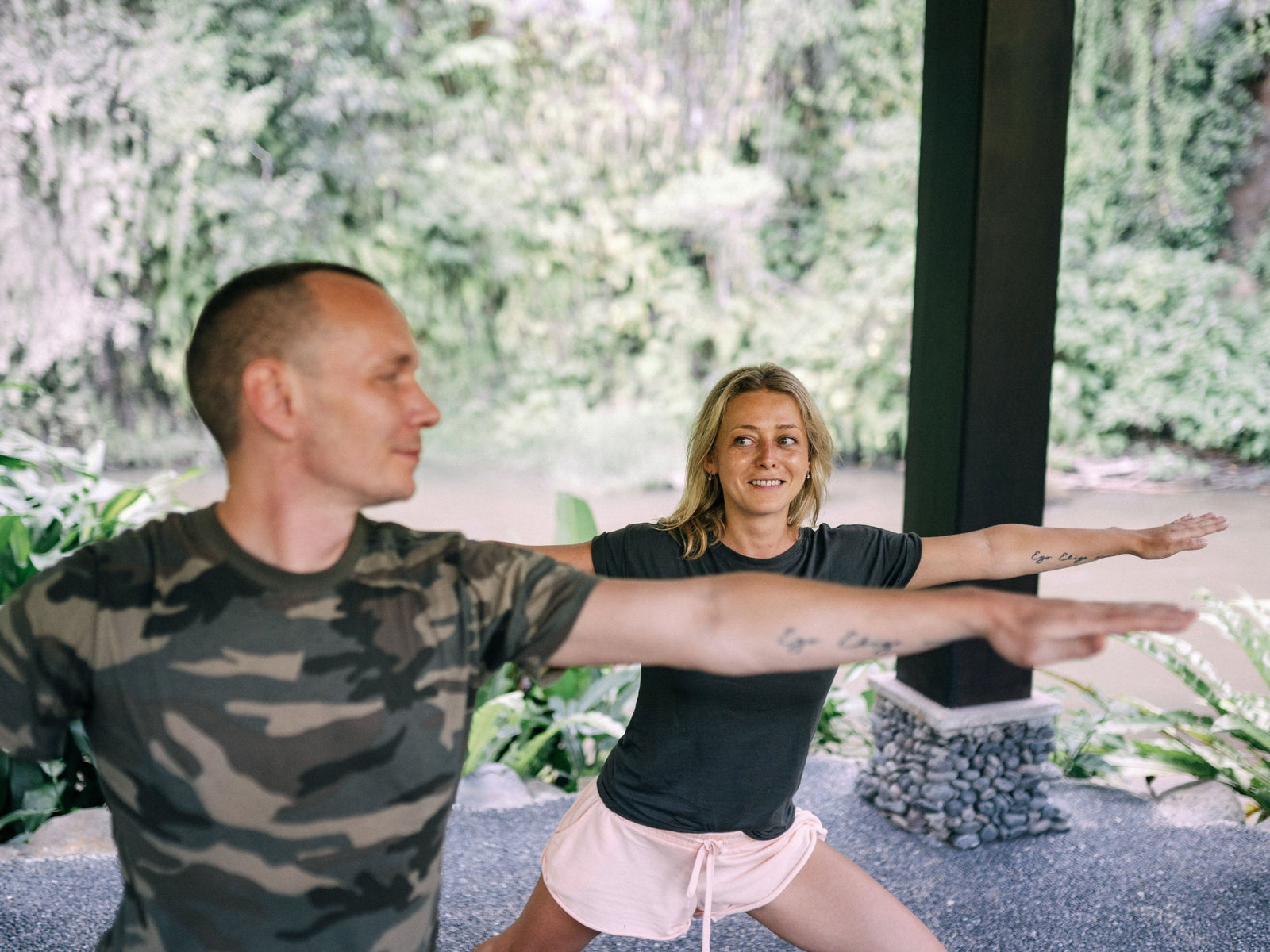
It's 7:12 AM in Ubud, and I actually planned to do nothing for once on vacation. However, yoga starts at 8 AM. At 10 AM, there's Adaptogenic Cacao, at 11 AM Sound Healing, and sometime in the afternoon, I could get my chakras aligned.
Breathwork should fit in between.
And I also wanted to meditate.
Welcome to the wonderful world of wellness tourism in Bali, where we fly to the other side of the world to finally let go – and proactively create a rather ambitious daily schedule for ourselves.
Because at some point, the search for peace turned into something strange:
Stress while relaxing.
Why has Ubud become the center for wellness and spirituality?
For decades, Ubud has been considered the cultural and spiritual center of Bali. Temples, traditional healing methods, yoga, meditation, and the unique landscape around the town have long attracted international travelers.
Meanwhile, a huge modern wellness world has developed around it. Yoga studios meet meditation, breathwork, sound healing, cacao ceremonies, ecstatic dance, retreats, massages, and nutritional offerings.
This can be wonderful.
Ubud genuinely offers space to slow down, learn new practices, and open up to things for which there is little room in everyday life.
But we humans have an amazing ability:
As soon as something is good for us, we try to pack as much of it as possible into a single day.
When did relaxation become so exhausting?
In the past, wellness might have meant a sauna, a massage, and then just lying around somewhere.
Today, self-care can definitely require a calendar.
7:30 AM Meditation.
8:00 AM Vinyasa Flow.
10:00 AM Journaling.
11:00 AM Sound Bath.
1:00 PM Plant-based Lunch.
3:00 PM Breathwork.
5:00 PM Yin Yoga.
And in the evening, you sit completely exhausted at dinner, talking about how important it is to listen more to your own body.
At this point, the body probably says:
Please go to sleep.
Self-optimization simply flew to Bali with us
Perhaps this is precisely the contradiction.
We leave our scheduled daily lives, but we take the mindset behind it with us.
At home, we want to work more productively, exercise more, sleep better, and use our time efficiently. In Bali, we suddenly want to breathe more consciously, meditate more deeply, eat healthier, and grow spiritually.
The goal changes.
The urge to optimize remains.
From "How much can I get done today?" it becomes:
"How much can I heal today?"
And suddenly, even relaxation feels like a task that needs to be successfully completed.
Sound Healing, Breathwork & Co.: What are we actually looking for?
It would be too simple to dismiss the modern wellness world as an Instagram trend. People seek these offerings for various reasons: relaxation, community, curiosity, personal development, or simply a new experience.
Travel, in particular, creates space for this.
At home, you might never spontaneously go to a sound meditation. In Ubud, you think:
Why not?
And there can be something beautiful in that. Travel allows us to try things without having to immediately decide if they will become part of our identity forever.
You can find sound healing interesting without subsequently smuggling a singing bowl into your carry-on.
Spirituality meets perfect marketing
At the same time, it's hard to talk about modern wellness travel without talking about business.
Wellness has long been a global industry.
Retreats are professionally marketed, studios build international brands, and practices, sometimes based on long religious or cultural traditions, become bookable experiences.
This creates an interesting contradiction.
We search for something authentic – and book it online.
We want to detach ourselves from consumption – and buy a retreat package for it.
We want less – and suddenly have a shopping list of a yoga mat, supplements, linen outfit, and reusable water bottle.
Minimalism can become surprisingly expensive.
Can enlightenment actually be booked?
Of course not.
Nevertheless, the language of some wellness offerings occasionally sounds as if personal transformation is a service with a start time.
"Reconnect."
"Release."
"Transform."
"Awaken."
All between breakfast and dinner.
The problem is not that people want to change. The idea of taking time for oneself is probably more important than ever.
It only becomes difficult when we start treating inner development the same way we treat our to-do list.
Attended session.
Checked off.
Next chakra.
When healing becomes content
Then there's the smartphone.
You're in a beautiful place to be present – and first film how present you are.
The yoga mats are perfectly aligned.
The light filters through the jungle.
The singing bowls are ready.
Just a quick story.
Then phone on airplane mode.
Of course, only after the story has been uploaded.
This sounds contradictory, but it's very human. We want to experience things and at the same time capture them. We want to change and show others that we are changing.
Modern spirituality does not take place outside our digital world.
It has to come to terms with it.
The search for authenticity can look surprisingly standardized
The fascinating thing about global wellness tourism is how similar certain places can look now.
Bali.
Tulum.
Ibiza.
Costa Rica.
Natural materials, incense, smoothies, yoga, ceramics, linen, and a menu where an astonishing number of things are "healing."
You travel thousands of miles in search of something authentic – and end up in an aesthetic you already know from Instagram.
This does not mean that the experience is worthless.
But perhaps it's worth asking whether we are truly discovering a place or just seeking a familiar idea of wellness within it.
Ubud is more than a backdrop for self-discovery
Especially in Bali, this question is important.
Because the island's spirituality was not invented for travelers. Balinese Hinduism visibly shapes the daily lives of many people – through temples, ceremonies, offerings, and religious rituals.
This living culture is different from the international wellness world that has partly developed around it.
Both can coexist.
But visitors should know the difference.
Not every Cacao Ceremony is Balinese tradition. Not every retreat represents local spirituality. And Ubud is not one giant wellness resort waiting to transform us.
It is a real place where people live.
Actually self-evident.
In wellness marketing, this sometimes gets lost.
Maybe we don't need another session
Maybe that one afternoon will come someday.
No yoga.
No workshop.
No massage.
No plan.
You just sit somewhere.
Drink a coffee. Wander around. Look at the rice fields. Listen to the sounds and for a few hours have nothing to work on.
Not even yourself.
And perhaps that suddenly feels more radical than any retreat.
Because in a world that constantly tells us we can be healthier, more productive, more mindful, and more balanced, the idea that we don't have to improve anything for an afternoon is almost unfamiliar.
Perhaps doing nothing is the real luxury treatment
Wellness can be incredibly valuable. Yoga can feel good. Meditation can feel good. A massage certainly can.
But more wellness does not automatically mean more well-being.
Perhaps we don't need to turn every free moment into an opportunity for self-development. Perhaps a vacation can also include days that produce no transformation whatsoever.
No breakthrough.
No insight.
No new morning routine.
Just a rather beautiful day.
And perhaps that's the lesson most easily overlooked in Ubud:
You don't have to do yoga at eight, lie down at a sound healing at eleven, and have found the best version of yourself by 2 PM.
You can also just sit somewhere.
Optimize nothing.
Manifest nothing.
Heal nothing.
And surprisingly find that you're perfectly fine through the afternoon anyway.
Enlightenment?
Let's see tomorrow.