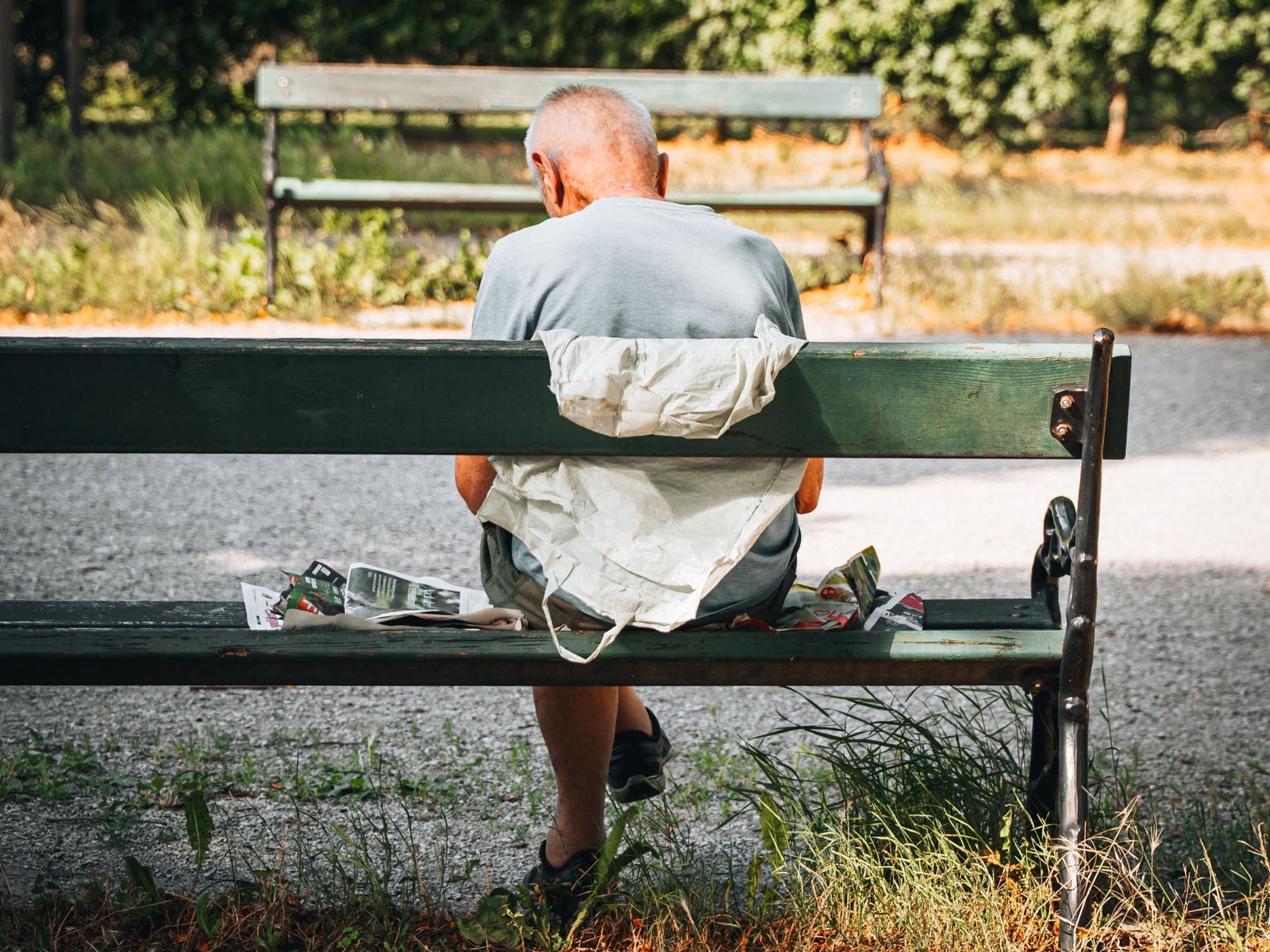
The Bench: Vienna's Most Underrated Luxury
The "Bankerl": Vienna's Most Underrated Luxury
Vienna invented the "Heuriger" (wine tavern), elevated coffee house visits to an art form, and made Sunday strolls a mandatory exercise. But perhaps Vienna's most genuine invention usually stands where no one considers it a luxury: the "Bankerl" (little bench).
No skyline, no admission fee, no hashtag. Just four planks, two cast-iron legs, and a view that changes subtly from day to day, from light to light.
And yet, half the city sits on it.
Perhaps because a "Bankerl" is the only thing in Vienna that asks nothing of you. No obligation to order, no opening hours, no conversation if you don't want one. Just take a seat, observe, simply be.
What distinguishes a "Bankerl" from an ordinary bench
The word alone makes the difference. A "Bank" is furniture. A "Bankerl" is a relationship.
You don't just sit on a "Bankerl," you return to it. There's the "Bankerl" near the Naschmarkt where you always eat the same Krautfleck (cabbage pastry). The "Bankerl" in Türkenschanzpark that has just the right amount of shade at four in the afternoon. The one "Bankerl" by the canal that has been wobbly for ages but is still occupied every summer even before the sun is fully up.
A "Bankerl" has a reputation. Some even have a name.
The Danube Canal: The city's most informal living room
Nowhere is Viennese "Bankerl" culture as unadulterated as by the canal. Students sit here next to pensioners, a baguette is declared dinner, someone practices guitar, three meters away people discuss rent, heartbreak, or the last exam.
The "Bankerl" here knows no hierarchy. It doesn't matter what you do for a living, as long as you're willing to let the water flow by without being in a hurry.
The canal continues to flow towards the Danube. You yourself remain seated. And for a few minutes, that feels like the right decision.
The Prater: "Bankerl" between roller coasters and chestnut trees
The Prater has the Giant Ferris Wheel, the hustle and bustle, the smell of cotton candy. But if you look closely, a few meters off the main avenue, you'll find something much quieter: old wooden "Bankerl" under chestnut trees, where the noise of the fair turns into a gentle rustle.
No tourist groups come here. People come here who need a break from their own excursion. A child falls asleep in the stroller, an elderly gentleman folds up the newspaper stand, a couple shares a portion of Langos without saying a word.
The Prater is an amusement park and a quiet retreat at the same time. The "Bankerl" makes both possible, often just a few steps apart.
The Gürtel: Vienna's most underrated "Bankerl" area
The Gürtel is considered loud, gray, a bit inhospitable. Unjustly so, as anyone knows who has ever sat on one of the "Bankerl" along the Stadtbahn arches, a coffee in hand, while the subway rattles by overhead and life simply goes on below.
Here, Vienna is not postcard-perfect, but real. The "Bankerl" on the Gürtel tell of a city that doesn't exclusively doll itself up for visitors, but also functions where no one takes photos.
Sometimes that's precisely the most beautiful part of a city: the part that doesn't try to be beautiful.
The small squares: neighborhood "Bankerl"
Beyond the big stages, the city's true capital lies in its small squares. A fountain, a few trees, two, three "Bankerl" where a neighborhood spontaneously forms.
Here, nothing is planned; encounters simply happen. The dog knows the dog next door, the child on the neighboring "Bankerl" is learning to ride a bike, someone is reading, someone is gently arguing with their phone, someone is just silently sharing the moment.
These places are not in any travel guide. Perhaps that is their greatest luxury.
Why sitting is the most honest way to experience a city
You can tick off Vienna at a run: St. Stephen's Cathedral, Hofburg, Naschmarkt, three hours, one photo per stop. Or you can sit down.
Those who sit see differently. You notice the woman who passes by with the same dog every day at half past five. The waiter who disappears for a cigarette break. The light that completely changes within fifteen minutes and re-colors the entire street.
A "Bankerl" forces you to slow down. And slowness is, quite honestly, the most underrated way to truly get to know a city instead of just ticking it off.
The "Bankerl" as a status symbol of slow living
In a city that likes to present itself as cozy, the "Bankerl" is almost a small rebellion against the rest of the world, which constantly demands availability.
Those who sit on a "Bankerl" do nothing productive. No sales, no story, no networking. Just time that belongs to no one but themselves.
Perhaps that is the real luxury: allowing yourself to be completely unimportant for ten minutes.
Finally: Vienna invites you not just to look, but to sit
Other cities build viewing platforms. Vienna puts up a "Bankerl" and leaves the rest to you.
Perhaps that is precisely the difference between a city that wants to impress and a city that simply wants to be there, for the moment you sit down.
So, on your next walk through Vienna: feel free to pass by a "Bankerl" and actually take a seat. Not for the photo. But for the ten minutes of the city that you would otherwise overlook.