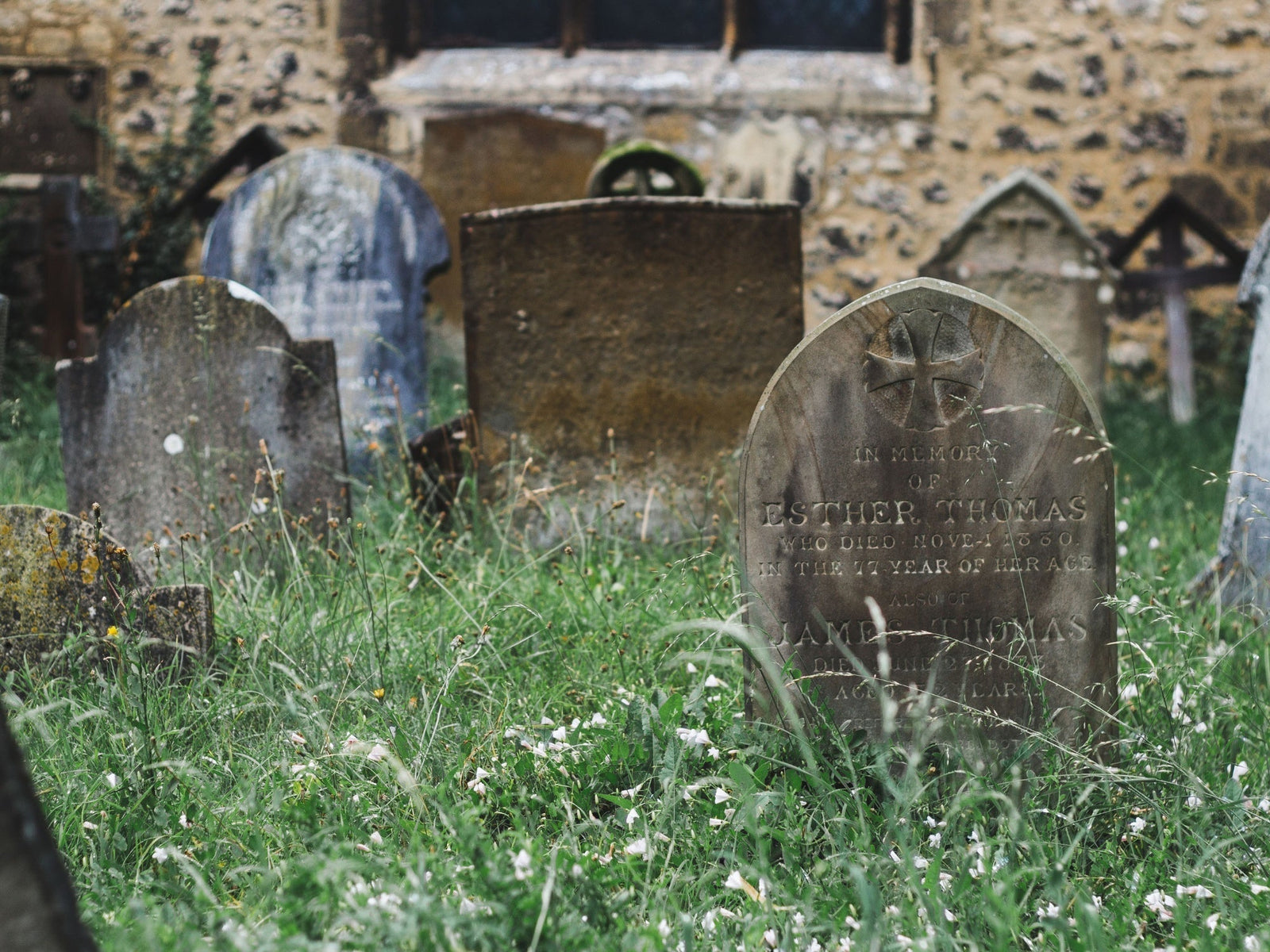
Morbid Vienna: Why Viennese Take a Macabre View of Death
Morbid, Yet Cozy: Why Vienna Even Cracks Jokes About Death
In other cities, people try to avoid death as much as possible. In Vienna, songs have been dedicated to it, one of Europe's largest cemeteries has been built, and with the "schöne Leich" (beautiful funeral), an expression has even been found that a funeral can indeed have a representative quality.
That sounds grim. But it's not necessarily so.
Because Vienna's special relationship with death is less about constantly thinking about dying here. Rather, the city has developed an astonishing ability to integrate the inevitable into life with black humor, rituals, and a certain serenity.
Or, in other words: In Vienna, even death can have a bit of a "Schmäh" (charm/wit).
Why is Vienna considered so morbid?
Vienna's reputation as a morbid city has historical and cultural roots. Death and transience have been strikingly present for centuries – in music and literature, in funeral culture, in cemeteries, and not least in the famous Viennese black humor.
However, "morbid" in Vienna doesn't automatically mean gloomy or depressing. It rather describes this peculiar closeness to the topic of death: people talk about it, sometimes crack a joke about it, and then go for a coffee.
Death and zest for life don't have to be opposites here.
Perhaps one even works better if the other isn't completely suppressed.
"A schöne Leich" – when even the funeral should make an impression
Hardly any expression tells as much about Vienna's old relationship with death as "a schöne Leich". This doesn't refer to the deceased themselves, but to a particularly dignified, representative funeral.
Especially in 19th-century Vienna, the burial could also be a social event. The funeral procession, ceremony, flowers, and the number of mourners showed the status someone had held during their lifetime.
From today's perspective, the expression almost sounds macabre. At the same time, there's something very Viennese about it: If it's the last appearance, then make it a good one.
A bit of dignity.
A bit of staging.
And probably some would have had something to grumble about even then.
The Vienna Central Cemetery: Where death almost invites you for a stroll
If you want to understand why Vienna deals with death differently, you should visit the Vienna Central Cemetery. It is not only a burial ground but a vast landscape with avenues, historic gravestones, and the resting places of numerous famous personalities.
Among others, Ludwig van Beethoven, Franz Schubert, Johann Strauss, and Falco are buried here. At the same time, the Central Cemetery is a place where people stroll, admire architecture, discover history, and, with a bit of luck, even observe wild animals.
This seems unusual at first.
A cemetery as an excursion destination?
In Vienna, yes.
Perhaps this is precisely where the city's special relationship with transience is revealed: the cemetery is not completely separated from life. It remains part of the city.
Why Viennese love to joke about death
Viennese humor has always had a darker side. Black humor doesn't make death meaningless but takes away its power for a moment.
Instead of talking reverently around the topic, one approaches it with irony. Not because dying is funny, but because humor is a way to deal with something that cannot be changed anyway.
This is where Viennese morbidity meets Viennese Schmäh.
Both love nuances. Both can be serious and not entirely serious at the same time. And both work best when you understand that behind the joke there can indeed be melancholy.
Death even has a museum in Vienna
That Vienna not only preserves but even exhibits its funeral culture fits the city astonishingly well. The Funeral Museum at the Vienna Central Cemetery deals with funeral rituals, historical burial forms, and Vienna's special relationship with death.
The mere existence of such a museum says a lot.
Other cities showcase their emperors, artists, and palaces. Vienna does, of course, too.
But Vienna also shows you how it buries its dead.
It hardly gets more consistent than that.
Between Mozart, Falco, and "Long Live the Central Cemetery"
Death also repeatedly appears in Viennese culture. In music, literature, and theater, people die, are mourned, and reflect on transience – sometimes seriously, sometimes with a wink.
Wolfgang Ambros' "Es lebe der Zentralfriedhof" (Long Live the Central Cemetery) became particularly iconic. The title itself contains this typically Viennese contradiction: Long live – the cemetery.
Perhaps Vienna's relationship with death can hardly be better summarized.
Life and death do not stand neatly separated side by side. They are allowed to contradict each other, overlap, and occasionally even end up in a punchline together.
What does all this have to do with coziness?
Surprisingly much.
Because Viennese coziness doesn't necessarily mean that everything has to be cheerful and carefree. A coffee house can be cozy and melancholic at the same time. A song can sound sad and still radiate warmth. And a walk through a cemetery can be thoughtful without becoming oppressive.
Perhaps that is a peculiarity of Vienna: melancholy doesn't have to be immediately fixed.
One is allowed to sit with it.
Preferably with a coffee.
Is Vienna really more morbid than other cities?
Of course, the image of morbid Vienna is also a cliché. People in Vienna don't spend their everyday lives thinking about funerals, and black humor is by no means an exclusively Viennese invention.
But clichés are particularly persistent when there's a kernel of truth in them.
In Vienna, death is indeed strikingly often encountered as part of cultural history. The Central Cemetery is a sight to behold, the "schöne Leich" is part of the linguistic heritage, and the funeral culture is even worthy of a museum.
What is crucial, however, is not so much how often death occurs, but how it is dealt with.
With respect, yes.
But not always with reverent silence.
Perhaps Viennese morbidity is actually an art of living
In the end, Vienna's famous proximity to death might tell us less about dying than about living.
Whoever knows that everything will eventually end can despair over it.
Or order a coffee.
Culturally, Vienna has surprisingly often chosen the second option.
Perhaps this explains this special mix of melancholy and pleasure, black humor and coziness. One does not completely suppress transience, but one also does not let it ruin the entire afternoon.
Death is part of it.
But so is life.
And if neither can be avoided, one can at least make a "Schmäh" about it.
Morbid? Perhaps.
But somehow also very cozy.